Make this page easier to read
Your choices are saved on this device.
Before automatic dialing became ordinary, an operator joined callers through a board of cords and jacks. Historic photographs reveal the scale and skill of the job.
The caller lifted a receiver and waited for a human voice. At the other end, an operator listened, located the right line, and connected two people who could not yet reach one another by dialing alone. The conversation belonged to the callers, but its beginning depended on skilled work at a switchboard.
The board behind the voice
A Library of Congress photograph of Capitol operator Harriot Daley records her 1898 start with 51 stations and her 1937 leadership of a staff serving 1,200 extensions. A panoramic switchboard photograph shows how many connections a board could present to an operator at once. These are examples of a job with technical demands: recognizing a request, finding the correct jack, and handling calls in order. The work was not simply answering a phone.
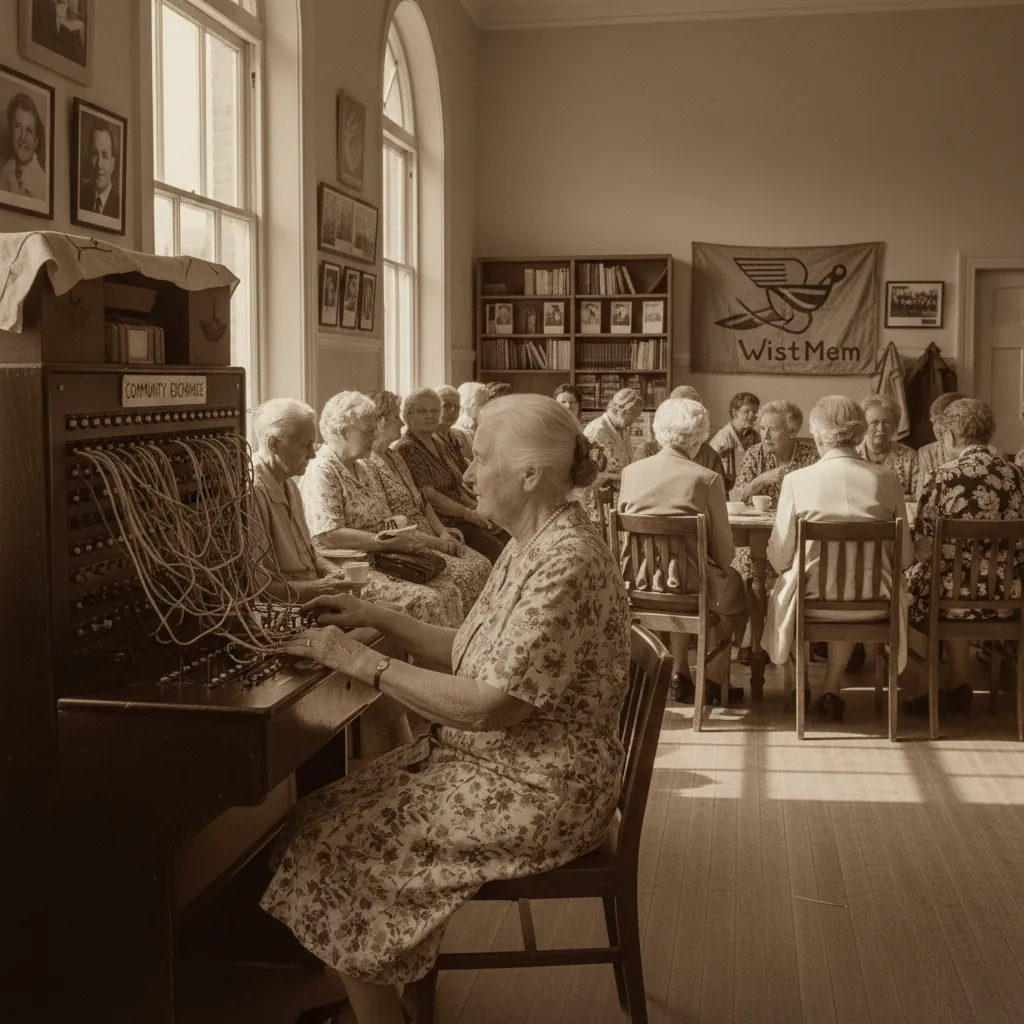 Illustration created for WistMem; not an archival photograph.
A familiar voice in a small place
In a town where customers used the same exchange repeatedly, the operator's voice could become familiar. Someone asking for a doctor, a shop, or a relative might hear the same calm reply that had helped them before. Familiarity did not mean the operator was part of every conversation; it meant the first step toward reaching another person had a human sound. Busy periods required speed, while a difficult connection required patience. The board's lights and cords gave the operator a changing picture of who was waiting. A caller might know only a surname or business, leaving the operator to identify the right line before making the connection. The person at the board helped translate local knowledge into a technical act.
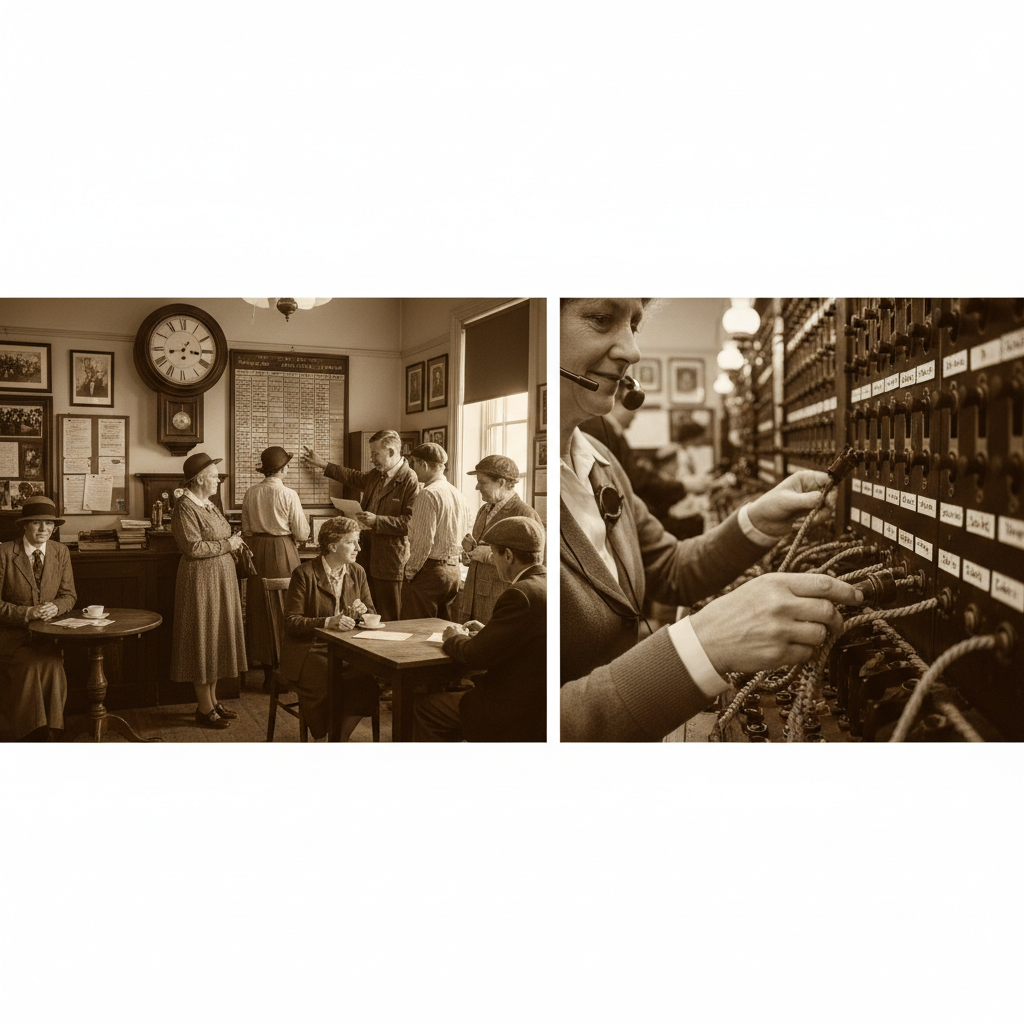 Illustration created for WistMem; not an archival photograph.
Remembering the person at the junction
If a family worked at an exchange, ask what a shift sounded like and which part of the board they knew best. If they called through one, ask whether they remember the operator's greeting. A call began with a person who knew which connection to make.
Continue into The Village Post Office and Gossip Counter, another service where people made the connection.
What does it bring back for you?
Ask someone who remembers, or begin with your own version. A few words can be enough.
Which local place do you remember visiting often?
Then ask: What made a visit there different from anywhere else?
Find more conversation starters Choose what feels comfortable. Ask before recording or sharing someone’s words.Relive the Memory
Find a little of the story.
Something here bring back a memory? Take a look at what you can find today.
Searching for: vintage antique telephone operator who
Vintage & collectible finds
Look for older objects and collectibles connected to this memory.
Search eBay (opens in a new tab)Related finds on Amazon
Explore items related to the same topic, from familiar styles to things made today.
Search Amazon (opens in a new tab)These links open search results. Items, prices, and availability vary.
Affiliate links. We may earn a commission at no extra cost to you.
As an Amazon Associate I earn from qualifying purchases. As an eBay Partner, WistMem may earn from qualifying purchases.
Does this bring back memories?
Share this story with someone who would remember.