Make this page easier to read
Your choices are saved on this device.
A porch could offer shade, a place for children, and a way to greet neighbors without arranging a visit. Historic photographs show how varied those settings were.
A chair carried onto the porch could change the pace of an evening. Someone watched the street while a child played close by; a neighbor could stop for a few words without coming inside. The porch made contact easy because it sat between private rooms and public movement. In a family story, its value may lie less in the architecture than in who chose to sit there.
What made the porch a meeting place?
The Library of Congress holds a 1941 photograph of people on front porches in a Chicago neighborhood and a Washington, D.C. photograph of a child playing on a porch. These are records of particular lives, places, and photographers, not a universal portrait of the past. Together they show how a porch could support both adult company and a child's play at the edge of home.
 Illustration created for WistMem; not an archival photograph.
The hour mattered. Before a household went in for supper, or after a hot day had eased, sitting outside could create a chance encounter. A person might recognize footsteps, see who had returned from work, or call a greeting across the street. Ask a relative who brought out the chairs, which direction they faced, and whether passersby were expected to stop. A specific answer turns an architectural feature into a social memory.
How can a porch photograph be read well?
Look beyond the people at the center. A railing, doorway, chair, or neighboring building can help identify the house. A 1978 American Folklife Center portrait of Mamie and Leonard Bryan on their porch shows why a porch can be both setting and subject in a family image. Record names and who supplied them while the photograph still prompts recognition.
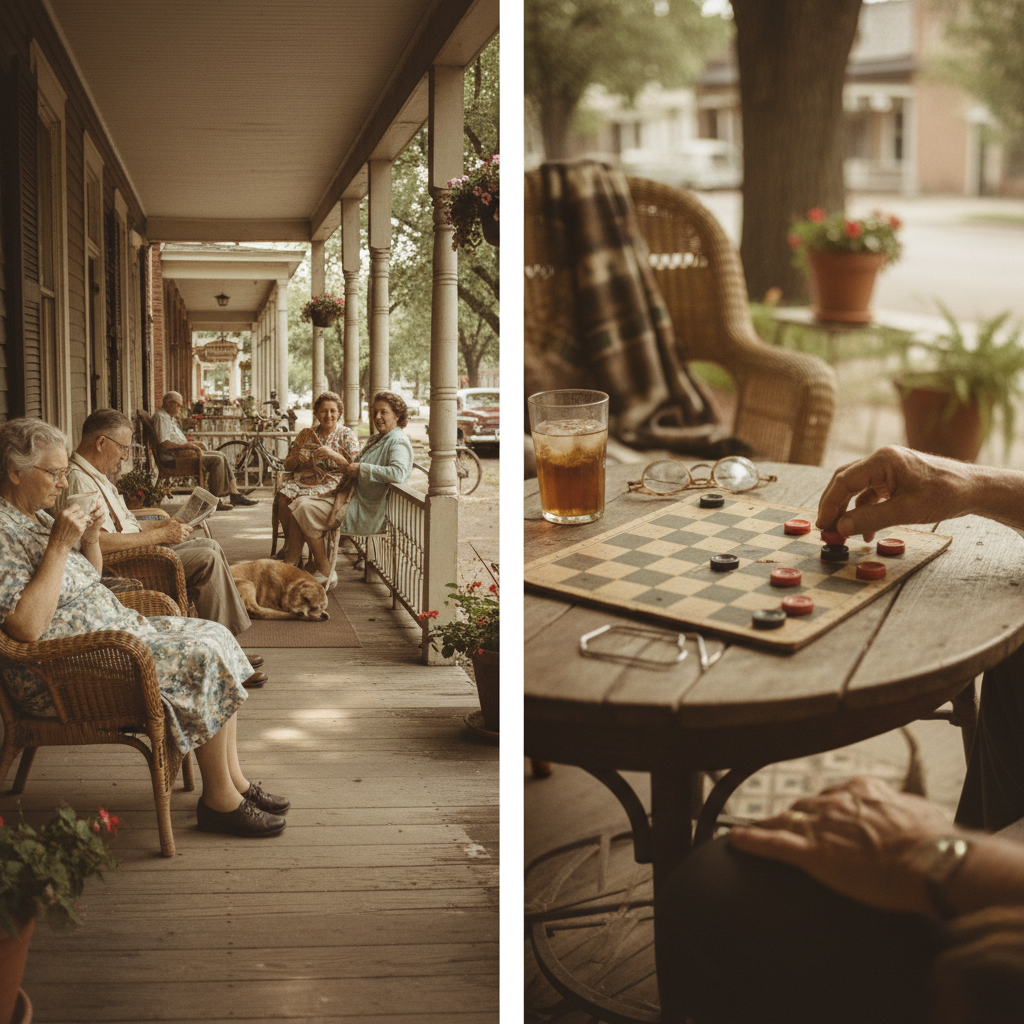 Illustration created for WistMem; not an archival photograph.
An empty porch in a later photograph need not mean the neighborly hour ended everywhere; a family may have moved, worked different hours, or found another place to gather. Ask where conversations shifted when the porch was no longer used. For a different kind of familiar public room, explore The Café Where They Knew Your Order.
What does it bring back for you?
Ask someone who remembers, or begin with your own version. A few words can be enough.
Which local place do you remember visiting often?
Then ask: What made a visit there different from anywhere else?
Find more conversation starters Choose what feels comfortable. Ask before recording or sharing someone’s words.Relive the Memory
Find a little of the story.
Something here bring back a memory? Take a look at what you can find today.
Searching for: vintage antique front porch sitting
Vintage & collectible finds
Look for older objects and collectibles connected to this memory.
Search eBay (opens in a new tab)Related finds on Amazon
Explore items related to the same topic, from familiar styles to things made today.
Search Amazon (opens in a new tab)These links open search results. Items, prices, and availability vary.
Affiliate links. We may earn a commission at no extra cost to you.
As an Amazon Associate I earn from qualifying purchases. As an eBay Partner, WistMem may earn from qualifying purchases.
Does this bring back memories?
Share this story with someone who would remember.