Make this page easier to read
Your choices are saved on this device.
A local talent show made familiar people briefly unfamiliar. The performer, accompanist, organizer, and audience all had a part in the evening.
A person who usually handed out tickets or helped set out chairs stepped onto the stage. In a village-hall talent show, that change of role could be more surprising than the act itself. The audience knew the performers from shops, school, or the next street. Applause had the warmth of recognition, and a mistake could be met with encouragement rather than silence.
The show assembled by the community
Someone had to find the hall, arrange the order, test a microphone, and decide what to do when an act ran long. The program might combine songs, comedy, instrumental music, dance, and a child's first public attempt. Smithsonian Folkways' account of community-center talent shows notes that such stages could be serious musical contests as well as local gatherings. That broader record helps resist treating every talent night as a quaint amateur diversion. For some performers it was a meaningful chance to be heard.
The hall's resources shaped the acts. A piano might need tuning, a singer might have to share one microphone, and a dance group might discover that the stage was smaller than its rehearsal room. An organizer could shift the order while someone found a missing prop. These practical adjustments were invisible from the audience's seats unless they went wrong; they were also the work that allowed neighbors to present a coherent evening.
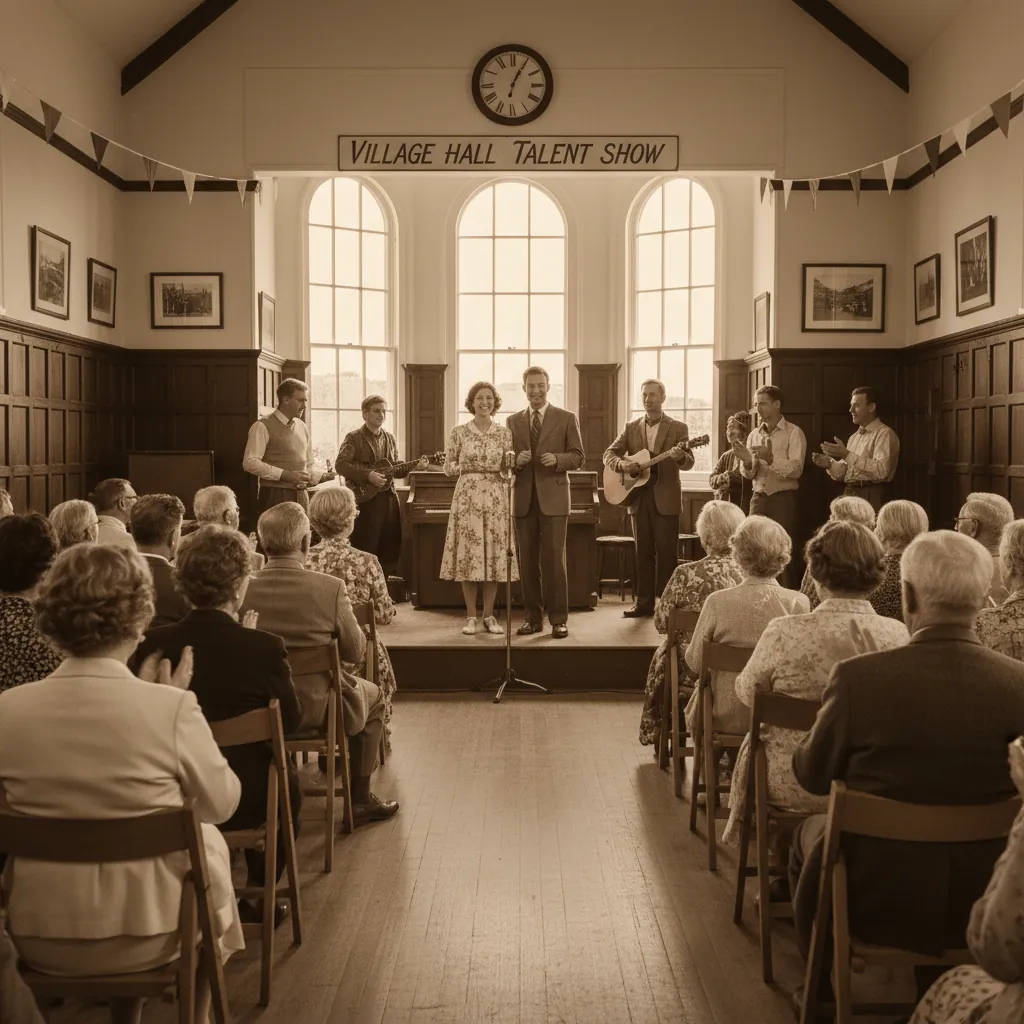 Illustration created for WistMem; not an archival photograph.
The audience had work of its own. They listened to people whose everyday selves they already knew. A confident singer could surprise a neighbor; an uncertain one could be carried through by friends joining the chorus. An accompanist might quietly rescue a missed cue. These exchanges made the hall part of the performance rather than a neutral backdrop.
What happened after the curtain
The evening often continued while chairs were stacked and people found their coats. A performer might finally hear what the audience thought; a shy child might be thanked by an adult they admired. The hardest moment may have been waiting backstage before the turn, and the most satisfying one may have come after the applause. Both belong in a full account of the show.
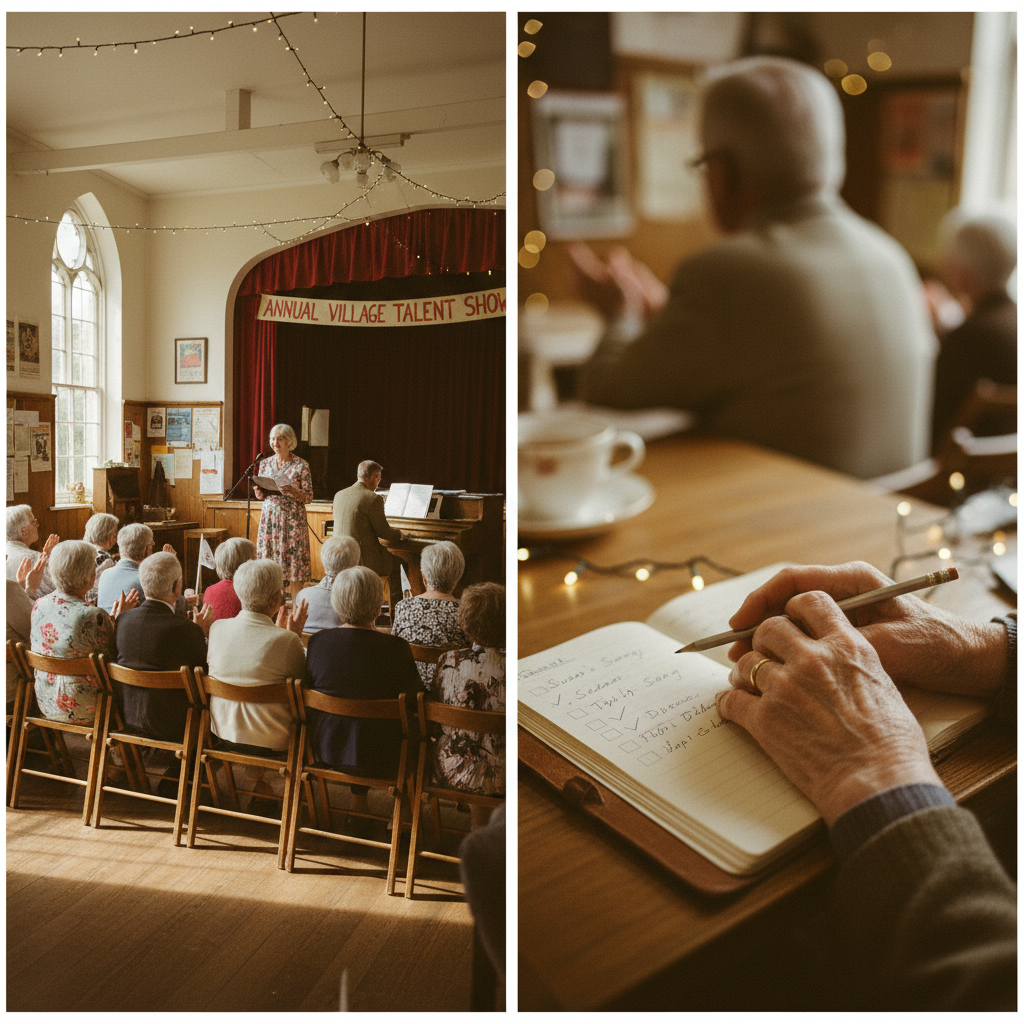 Illustration created for WistMem; not an archival photograph.
Who had to be persuaded to go on stage, and who helped them through it? That question may recover the hall's particular network of care. For a professional mixed bill that asked the audience to watch strangers, visit The Variety Show at the End of the Pier.
What does it bring back for you?
Ask someone who remembers, or begin with your own version. A few words can be enough.
What did you look forward to watching, hearing, or doing for fun?
Then ask: Who shared it with you, and what do you remember about that time?
Find more conversation starters Choose what feels comfortable. Ask before recording or sharing someone’s words.Relive the Memory
Find a little of the story.
Something here bring back a memory? Take a look at what you can find today.
Searching for: vintage retro talent show village
Vintage & collectible finds
Look for older objects and collectibles connected to this memory.
Search eBay (opens in a new tab)Related finds on Amazon
Explore items related to the same topic, from familiar styles to things made today.
Search Amazon (opens in a new tab)These links open search results. Items, prices, and availability vary.
Affiliate links. We may earn a commission at no extra cost to you.
As an Amazon Associate I earn from qualifying purchases. As an eBay Partner, WistMem may earn from qualifying purchases.
Does this bring back memories?
Share this story with someone who would remember.