Make this page easier to read
Your choices are saved on this device.
A double bill offered a main film and another feature, often with shorts or a newsreel. Remember the whole visit, including the interval and the walk home.
The ticket admitted you to more than one film. At a neighbourhood cinema, a double feature could turn an afternoon into a small expedition: find a seat, settle through the first story, stretch during the interval, and discover whether the second film was worth staying for. The poster outside might sell one star, while a different scene from the supporting film stayed with you afterward.
What the ticket bought
The Library of Congress guide to studio-era moviegoing notes that before the 1960s, audiences often saw a main feature, a B film, newsreels, and other shorts on one program. That arrangement helps explain why a cinema visit could take much longer than the running time of the advertised film. Programs differed by theatre and date; a local newspaper listing or surviving handbill can settle what was actually shown on a particular day.
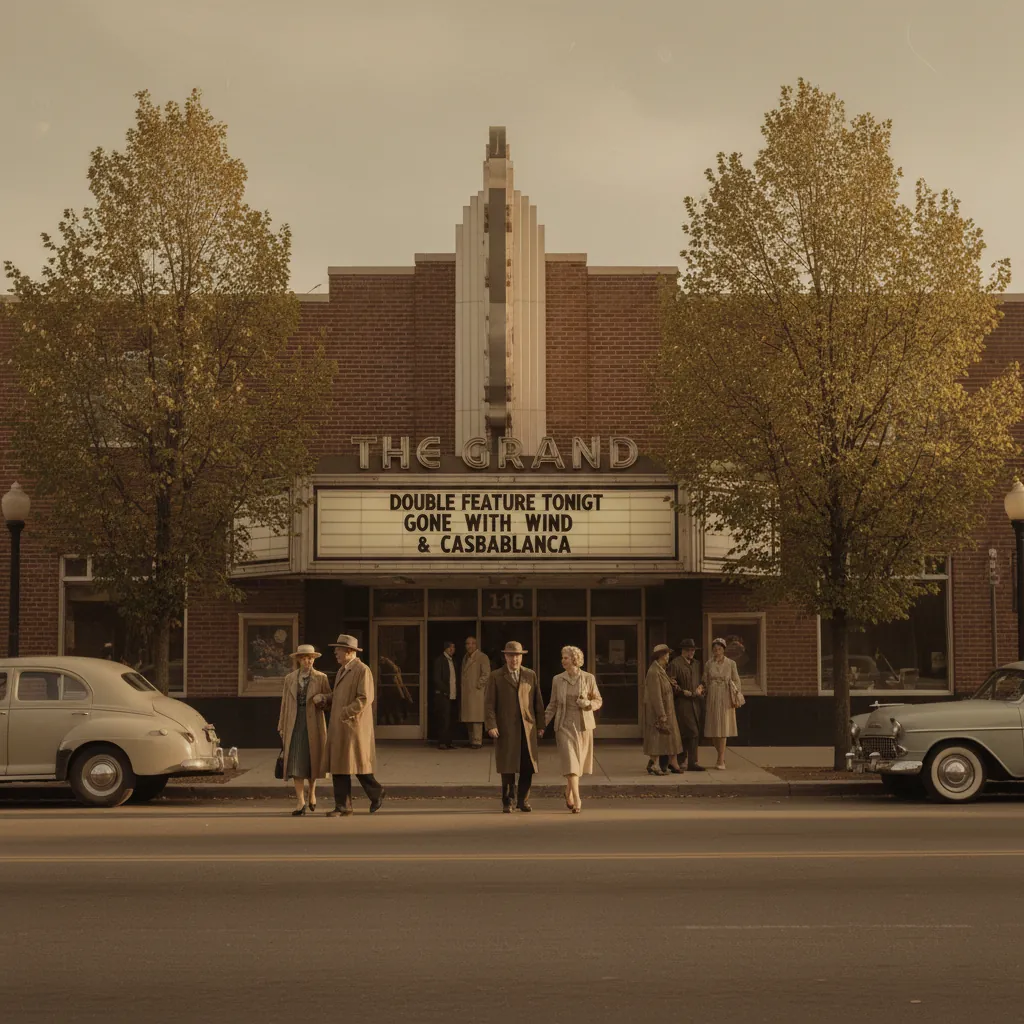 Illustration created for WistMem; not an archival photograph.
The room had its own rhythm. People arrived late, searched for seats in the dark, and whispered about what they had missed. The lights or curtains between films gave everyone a chance to shift, buy something, or decide they had had enough. A child might remember being allowed to stay for the second feature; a parent might remember planning a train or bus trip around the closing time. The cinema was a destination, not merely a screen.
Between the first and second feature
The interval gave the audience a chance to compare the film they had just seen with the one still to come. Some people stayed because a single ticket made the second feature feel like a bargain. Others slipped out before it began, especially if the advertised film had already played. The Library's studio-era guide treats the newsreel and short subjects as part of the whole program; these pieces could change the pace between the two longer stories. A cinema's timetable and the way people entered mid-program shaped what “going to the pictures” meant.
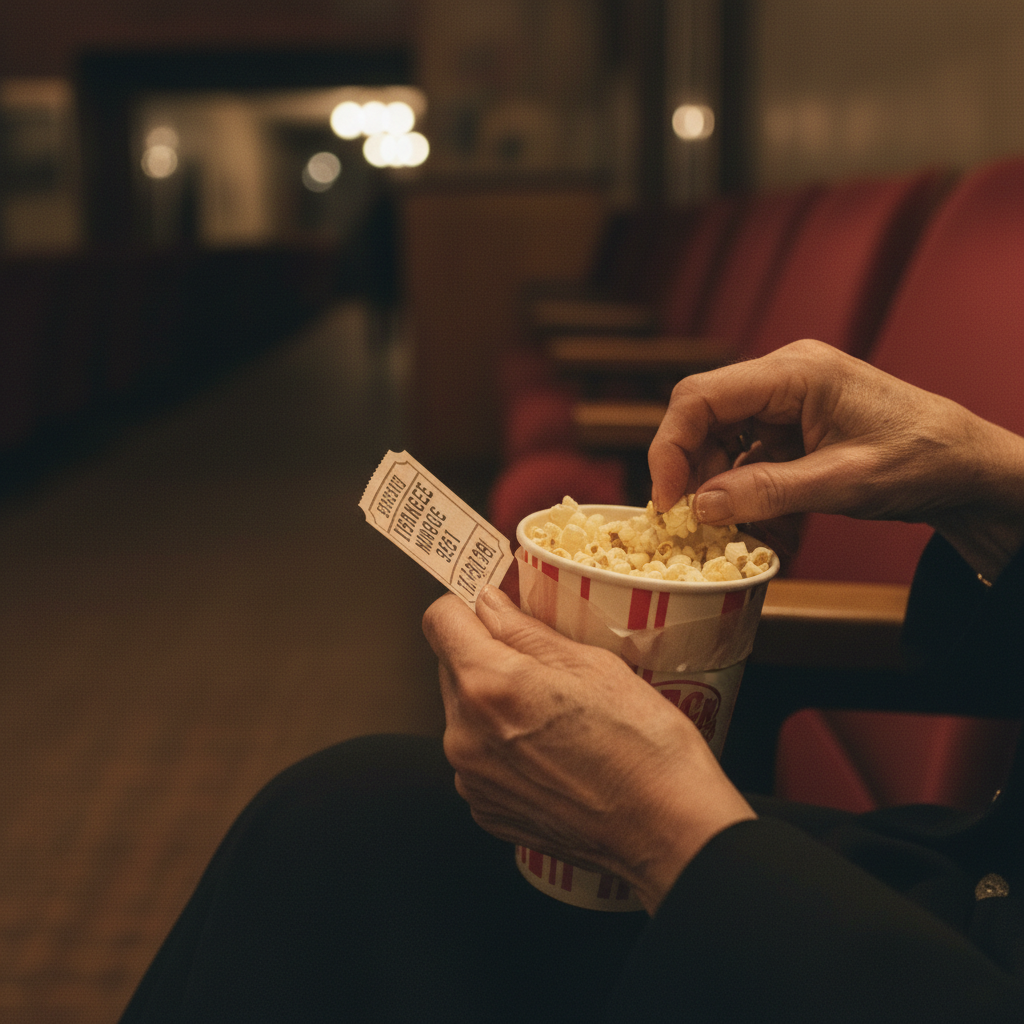 Illustration created for WistMem; not an archival photograph.
Which film did the person come to see, and which one did they discuss on the walk home? The answer may reverse the poster's promise. The unheralded supporting picture could be the one that survived in memory.
For a different way of seeing a film together outdoors, visit The Drive-In Movie Theater.
What does it bring back for you?
Ask someone who remembers, or begin with your own version. A few words can be enough.
What did you look forward to watching, hearing, or doing for fun?
Then ask: Who shared it with you, and what do you remember about that time?
Find more conversation starters Choose what feels comfortable. Ask before recording or sharing someone’s words.Relive the Memory
Find a little of the story.
Something here bring back a memory? Take a look at what you can find today.
Searching for: vintage retro double feature neighbourhood
Vintage & collectible finds
Look for older objects and collectibles connected to this memory.
Search eBay (opens in a new tab)Related finds on Amazon
Explore items related to the same topic, from familiar styles to things made today.
Search Amazon (opens in a new tab)These links open search results. Items, prices, and availability vary.
Affiliate links. We may earn a commission at no extra cost to you.
As an Amazon Associate I earn from qualifying purchases. As an eBay Partner, WistMem may earn from qualifying purchases.
Does this bring back memories?
Share this story with someone who would remember.