Make this page easier to read
Your choices are saved on this device.
A radio serial asked listeners to picture the action, remember yesterday, and come back tomorrow. The suspense lived in the household between episodes.
Dinner dishes could wait for the next scene. A radio serial pulled a household toward one sound source, then left its characters in trouble until the following installment. With no image to settle every detail, listeners supplied the faces, rooms, and distances themselves. A pause in the actor's voice could create a picture as clearly as a painted set.
How a voice held an audience
Serial drama depended on continuity and interruption. An episode had to reward a returning listener while leaving enough unresolved to bring them back. The Library of Congress account of The Guiding Light describes its 1937 start on radio and later life on television. The Library's guide to women in radio also notes the commercial strength of daytime serials. An after-dinner family program might have had a different audience and tone, but it used the same powerful agreement with listeners: the story would continue at an appointed time.
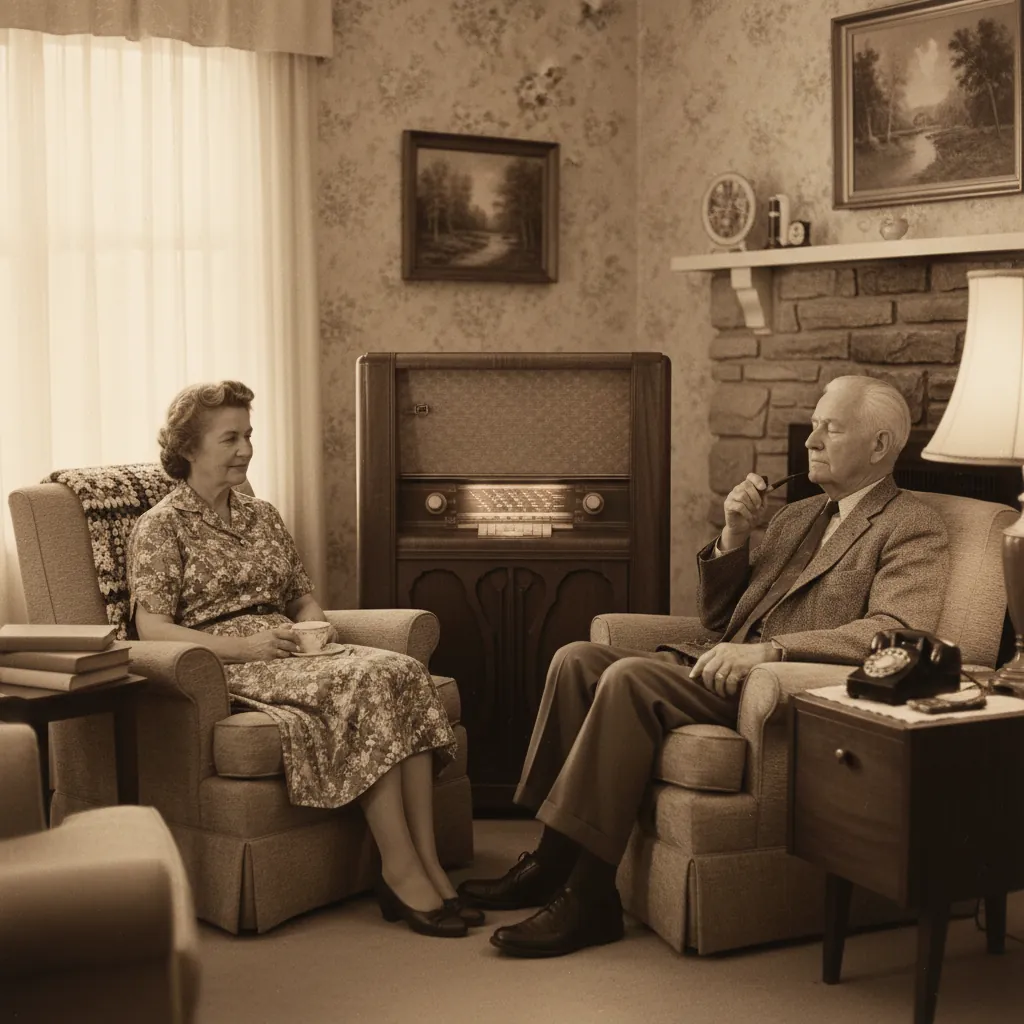 Illustration created for WistMem; not an archival photograph.
Sounds did work that a camera would later do. Footsteps could announce a visitor; a door closing could end a scene; music could warn that the story was turning. Listeners had to infer where characters stood and what they feared. The setting could follow them away from the radio. Someone might repeat a line while washing up or argue over what a character would do next.
The hour before the next episode
The interval was part of the form. If a person missed an installment, another listener could retell it, including their own judgment of the characters. A child might ask an adult to explain a plot twist and receive a different interpretation than the broadcast suggested. That shared reconstruction made the serial a household story as well as a transmitted one.
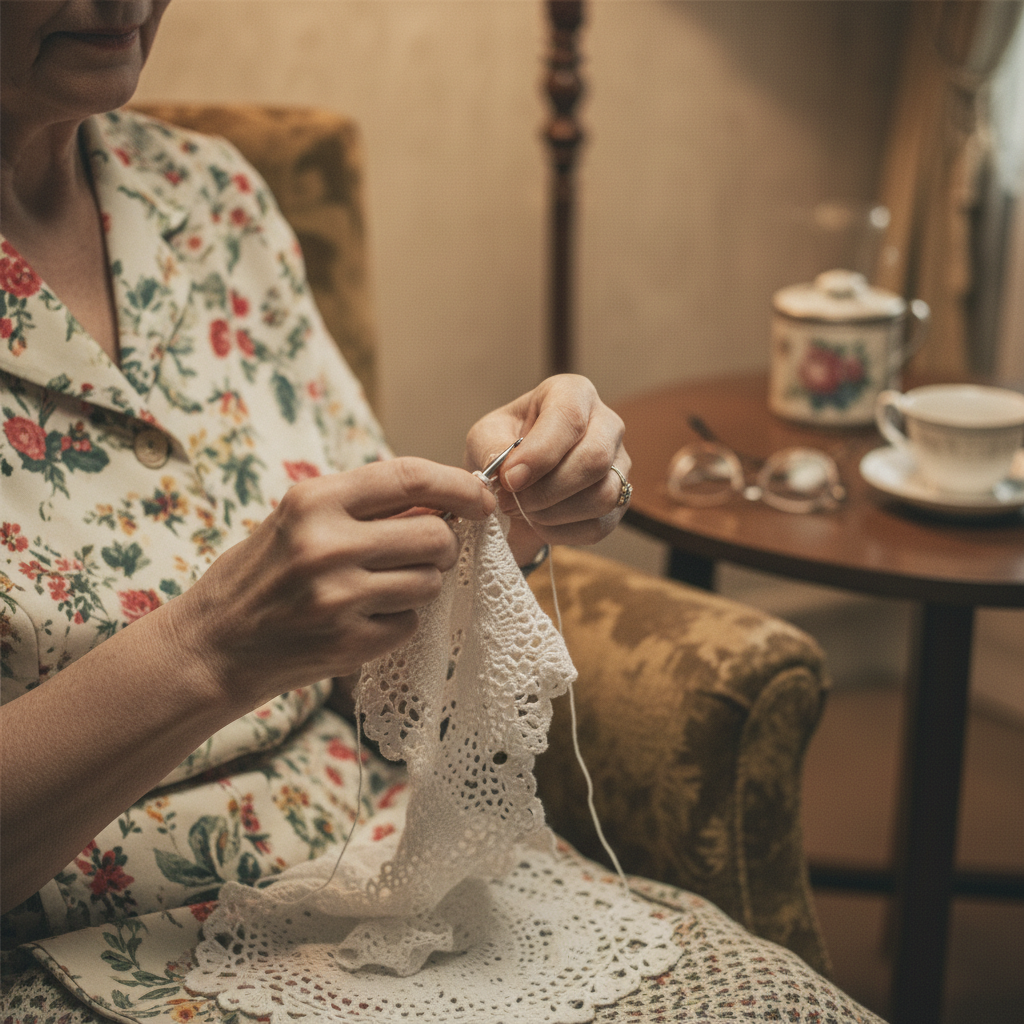 Illustration created for WistMem; not an archival photograph.
Which sound announced that the family had to be near the set—the theme, an actor's voice, or someone's call from the next room? The answer may recover a routine that a program schedule alone cannot. For a later screen-based serial with a similar daily pull, read The Afternoon Soap Opera and the Unfinished Story.
What does it bring back for you?
Ask someone who remembers, or begin with your own version. A few words can be enough.
What did you look forward to watching, hearing, or doing for fun?
Then ask: Who shared it with you, and what do you remember about that time?
Find more conversation starters Choose what feels comfortable. Ask before recording or sharing someone’s words.Relive the Memory
Find a little of the story.
Something here bring back a memory? Take a look at what you can find today.
Searching for: vintage retro radio serial drama
Vintage & collectible finds
Look for older objects and collectibles connected to this memory.
Search eBay (opens in a new tab)Related finds on Amazon
Explore items related to the same topic, from familiar styles to things made today.
Search Amazon (opens in a new tab)These links open search results. Items, prices, and availability vary.
Affiliate links. We may earn a commission at no extra cost to you.
As an Amazon Associate I earn from qualifying purchases. As an eBay Partner, WistMem may earn from qualifying purchases.
Does this bring back memories?
Share this story with someone who would remember.