Make this page easier to read
Your choices are saved on this device.
The wire could carry words quickly across distance, but a messenger often brought the paper to the recipient. The knock could bring joy, business, or fear.
The message traveled faster than its paper envelope. Words sent by telegraph crossed distance electrically, but at the destination someone still had to bring them to the door. A messenger's arrival made the abstract speed of the network suddenly physical. The recipient took a printed or written form and learned why someone far away had chosen this urgent channel.
The last stretch of the network
The Library of Congress history of the telegraph traces public telegrams to Morse's 1844 demonstration. Much later, a 1979 Federal Register discussion of Western Union service distinguishes messenger delivery from delivery by telephone or mail. That distinction matters to the memory of a delivery boy: the telegram was not only a signal sent over a wire. Its final route through streets and buildings shaped when and how it reached a person.
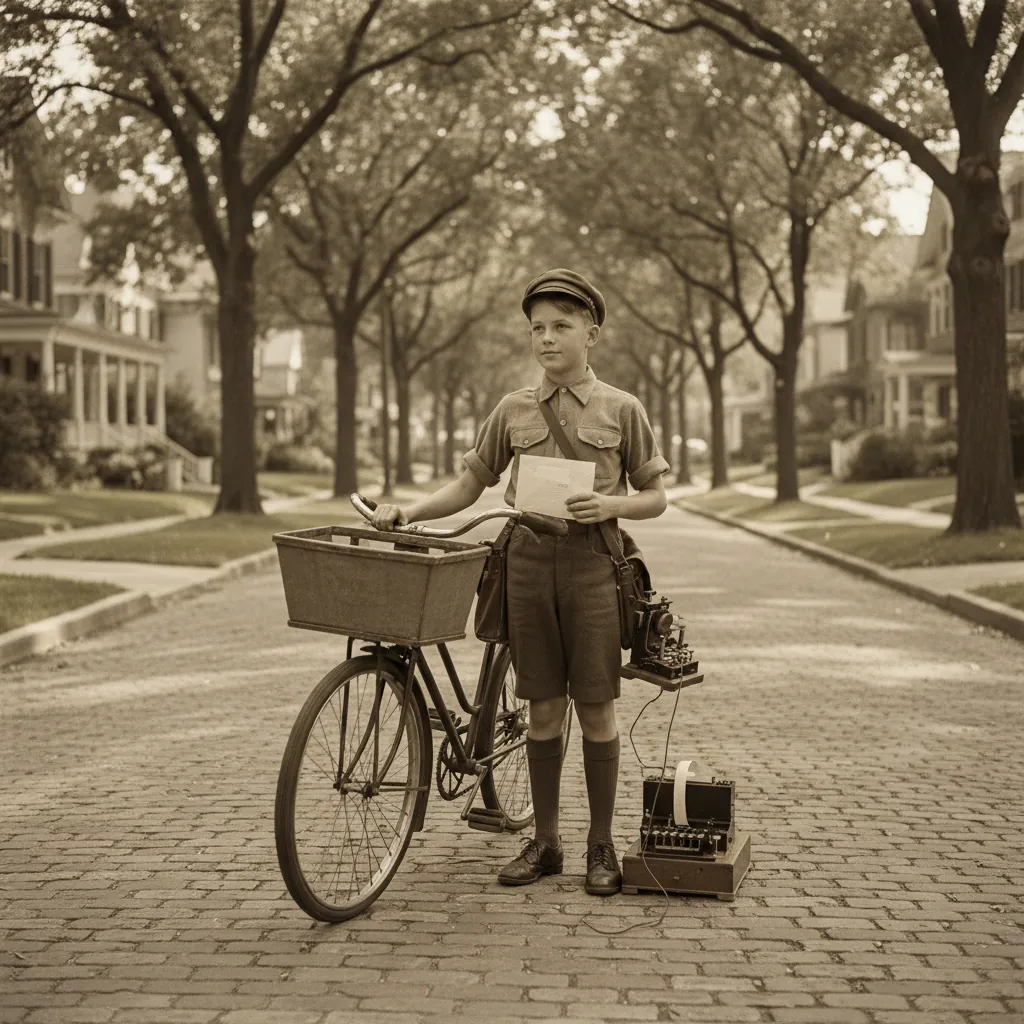 Illustration created for WistMem; not an archival photograph.
The form gave the message weight. A recipient could hold it, reread the wording, and pass it to someone else. Telegram language was often compressed because sending cost money and speed was the point. A birth, arrival, business instruction, or family emergency could all arrive in a format that looked similarly official. The messenger did not know every story carried in the envelope, yet their knock might be remembered for years.
Joy and dread at the same door
One reason telegrams have a charged place in memory is that they were used for grave news. The Library's Veterans History Project discussion describes official wartime notifications delivered through Western Union. That history should not make every telegram ominous. It shows how the method of delivery could frame the moment before a recipient had even read the first line.
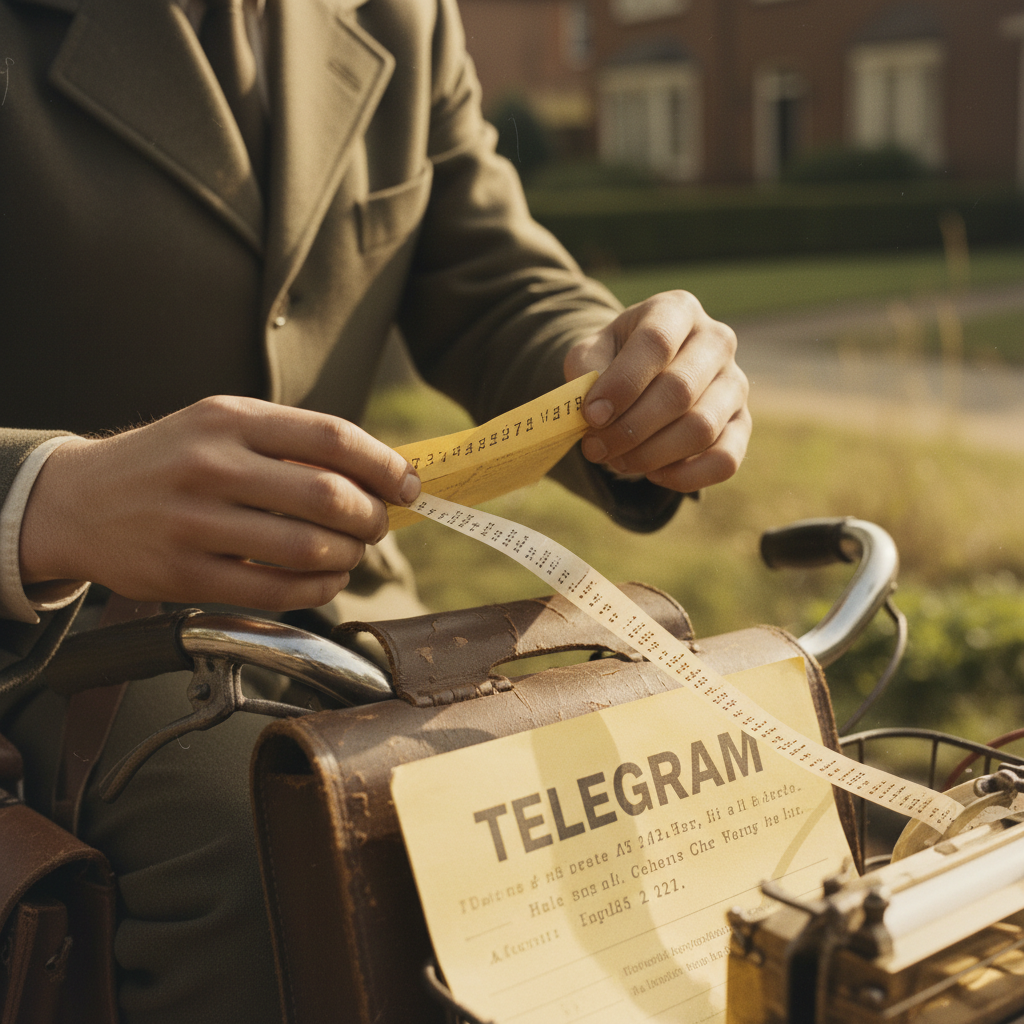 Illustration created for WistMem; not an archival photograph.
What did a family do after reading a telegram—call someone, save the paper, or leave immediately? The answer carries the event beyond the messenger's visit. For a later machine that put typed messages directly into an office, see The Telex Machine in the Newsroom.
What does it bring back for you?
Ask someone who remembers, or begin with your own version. A few words can be enough.
What object changed how you spent an ordinary day?
Then ask: How did you learn to use it, and what could it not do?
Find more conversation starters Choose what feels comfortable. Ask before recording or sharing someone’s words.Relive the Memory
Find a little of the story.
Something here bring back a memory? Take a look at what you can find today.
Searching for: vintage electronics telegram delivery boy
Vintage & collectible finds
Look for older objects and collectibles connected to this memory.
Search eBay (opens in a new tab)Related finds on Amazon
Explore items related to the same topic, from familiar styles to things made today.
Search Amazon (opens in a new tab)These links open search results. Items, prices, and availability vary.
Affiliate links. We may earn a commission at no extra cost to you.
As an Amazon Associate I earn from qualifying purchases. As an eBay Partner, WistMem may earn from qualifying purchases.
Does this bring back memories?
Share this story with someone who would remember.