Make this page easier to read
Your choices are saved on this device.
Record shops were more than shelves of discs. Staff knowledge, local scenes, and the act of browsing shaped what listeners found.
The sleeves faced outward in the front display, but the discovery might be in a bin farther back. A record-store visit asked for patience: flip through covers, read unfamiliar names, and decide whether a single or album deserved the money in your pocket. A friend could recommend a performer; a shop worker could lead you to a sound the radio had not played. The trip made choosing music a social act before the record reached home.
Shops as local music guides
The Smithsonian's history of neighborhood record stores documents how Black-owned and Black-serving shops connected artists to listeners, sold concert tickets, and helped local scenes grow from the 1950s through the 1990s. That account is a reminder that the store was not merely the final stop in a national distribution chain. Its owner, stock, and customers could shape what a neighborhood heard. Another high-street shop might have served a different community and genre mix; the exact place matters.
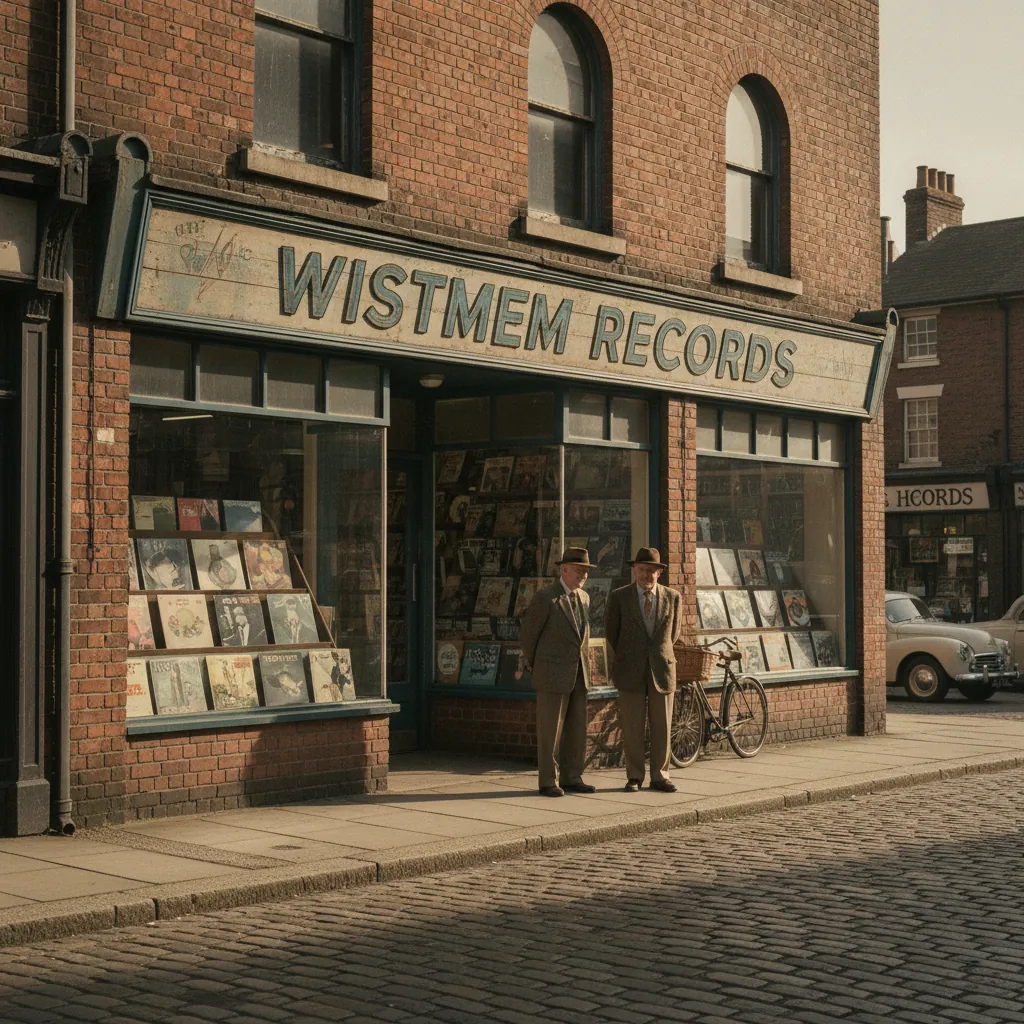 Illustration created for WistMem; not an archival photograph.
The format changed the decision. A 45 could bring home the song already stuck in someone's head, while an LP offered a longer commitment and a cover to study. The Smithsonian's Teen Markets exhibit links the spread of 45-rpm records with radio countdowns and youth music culture. In the shop, those national signals met local recommendation. A chart hit could be on display beside a regional artist whose name traveled by word of mouth.
The walk home with a sleeve
Buying the record did not end the outing. Someone had to carry it without bending the cover, get home, and find a turntable. The first listen might confirm the choice—or make the buyer wonder why they had ignored a friend's warning. Either way, the sleeve remained as a physical reminder of the decision. Its notes and price sticker could be reread long after the song was familiar.
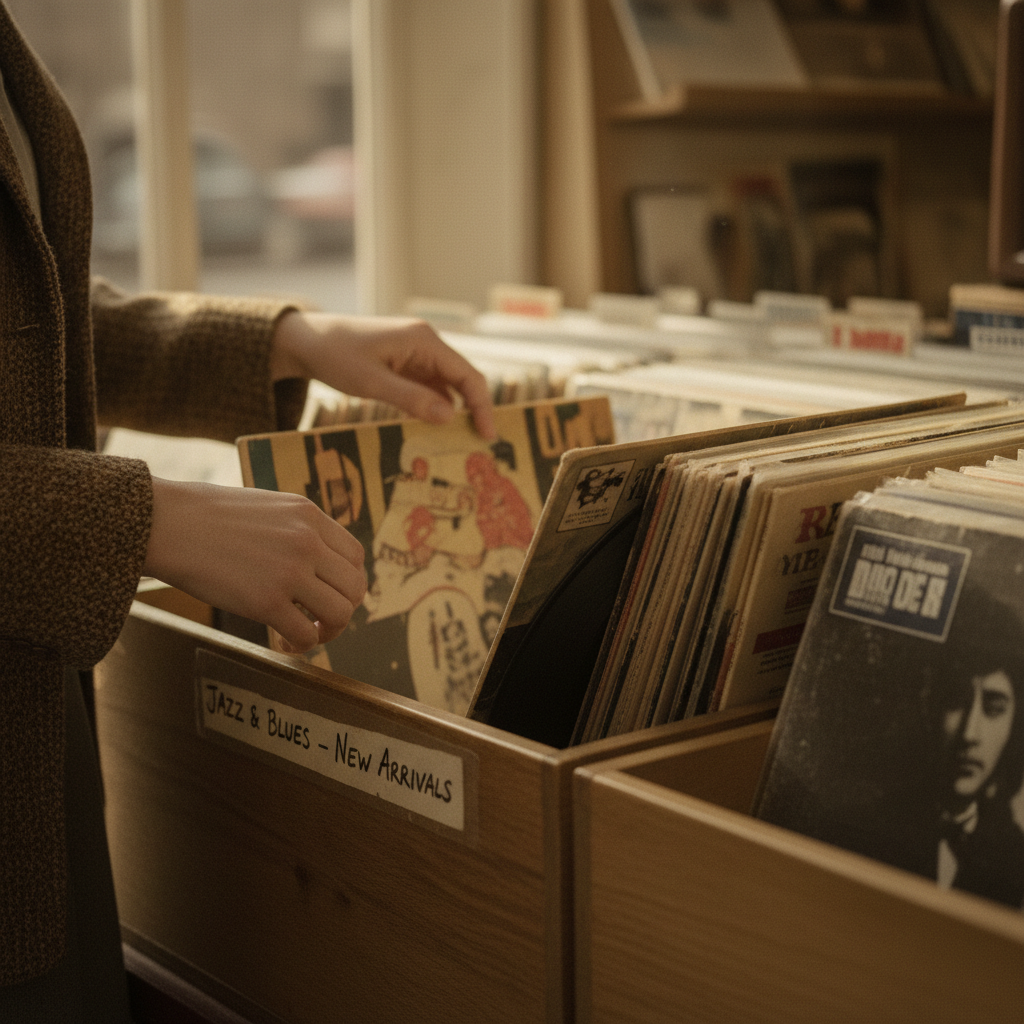 Illustration created for WistMem; not an archival photograph.
What recommendation changed a person's taste in that store? The answer may name an employee, a friend, or a stranger at the next bin. For a moment when music was chosen for a whole diner rather than a private collection, see Choosing One Song at the Diner Jukebox.
What does it bring back for you?
Ask someone who remembers, or begin with your own version. A few words can be enough.
What did you look forward to watching, hearing, or doing for fun?
Then ask: Who shared it with you, and what do you remember about that time?
Find more conversation starters Choose what feels comfortable. Ask before recording or sharing someone’s words.Relive the Memory
Find a little of the story.
Something here bring back a memory? Take a look at what you can find today.
Searching for: vintage retro record store high
Vintage & collectible finds
Look for older objects and collectibles connected to this memory.
Search eBay (opens in a new tab)Related finds on Amazon
Explore items related to the same topic, from familiar styles to things made today.
Search Amazon (opens in a new tab)These links open search results. Items, prices, and availability vary.
Affiliate links. We may earn a commission at no extra cost to you.
As an Amazon Associate I earn from qualifying purchases. As an eBay Partner, WistMem may earn from qualifying purchases.
Does this bring back memories?
Share this story with someone who would remember.