Make this page easier to read
Your choices are saved on this device.
A biscuit tin could outlast the biscuits by decades. Museum collections show how makers designed tins to be kept, while the surprising contents of one family tin tell their own story.
There is a particular disappointment in lifting a biscuit-tin lid and finding sewing needles, old buttons, or photographs instead. The surprise also tells you something useful: the box remained sturdy and attractive enough to keep after the food was gone. Its next job was chosen by the household, not the biscuit company.
Why were some tins made to last?
Decorative packaging was part of the product. Reading Museum's history of Huntley & Palmers tins traces printed gift tins to 1868 and explains how improved printing allowed more elaborate shapes and colors. The museum notes that some later tins hid the company name on the base, making them suitable as ornaments or home storage. That design choice helps explain why a tin might remain on a shelf long after its original contents were eaten.
 Illustration created for WistMem; not an archival photograph.
The Victoria and Albert Museum's collection history includes tins made to resemble books and other objects. One surviving 1907 field-glass-case tin at the Smithsonian shows how far the container could move from a simple round box. A family's plain everyday tin deserves the same careful look: a maker's mark, a label on the underside, or a design tied to a holiday may help date its first life.
What happened after the last biscuit?
The second use could be practical rather than decorative. Buttons stayed together; receipts avoided a drawer full of loose paper; a collection of small photographs acquired a lid. A reused tin did not automatically preserve delicate contents well, but it kept them close at hand. Before sorting one, photograph the layers as found. The order of items can explain which things were kept together, even when nobody wrote a label.
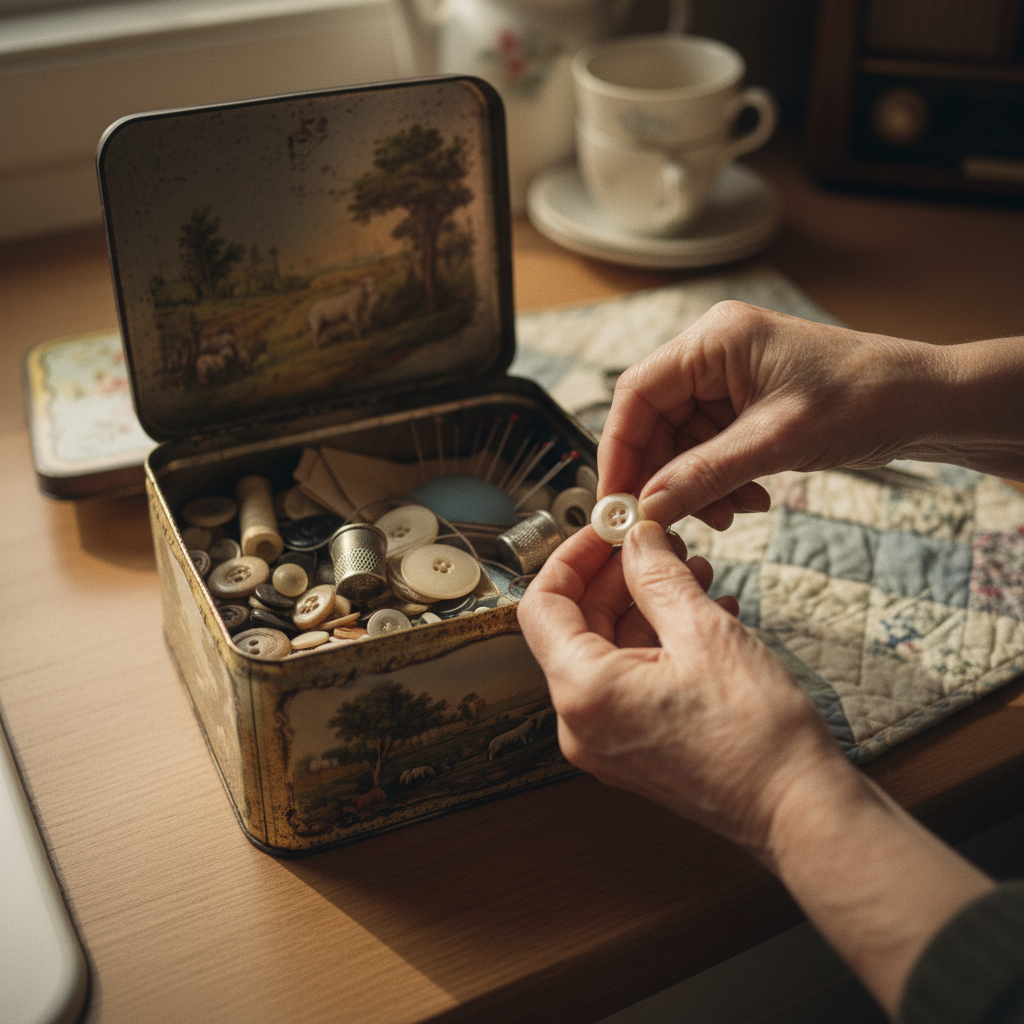 Illustration created for WistMem; not an archival photograph.
Ask who decided what belonged inside and whether the tin always sat in the same place. Did someone reach for it when mending a coat, paying a bill, or looking for a particular picture? The answer turns a familiar household joke into a map of ordinary work. For another container whose handwriting may tell more than its contents, read The Handwritten Recipe Box.
What does it bring back for you?
Ask someone who remembers, or begin with your own version. A few words can be enough.
What everyday sound or smell brings back a home you remember?
Then ask: Who was there, and what were they doing?
Find more conversation starters Choose what feels comfortable. Ask before recording or sharing someone’s words.Relive the Memory
Find a little of the story.
Something here bring back a memory? Take a look at what you can find today.
Searching for: vintage antique biscuit tin held everything
Vintage & collectible finds
Look for older objects and collectibles connected to this memory.
Search eBay (opens in a new tab)Related finds on Amazon
Explore items related to the same topic, from familiar styles to things made today.
Search Amazon (opens in a new tab)These links open search results. Items, prices, and availability vary.
Affiliate links. We may earn a commission at no extra cost to you.
As an Amazon Associate I earn from qualifying purchases. As an eBay Partner, WistMem may earn from qualifying purchases.
Does this bring back memories?
Share this story with someone who would remember.