Make this page easier to read
Your choices are saved on this device.
A tree house might be a platform, a rough shelter, or a fully built playhouse. Its meaning came from the people who made and used it; surviving photographs and plans reveal more than a generic image of childhood freedom.
A backyard tree house often began before the boards arrived. Someone pointed to a branch, someone imagined a doorway, and someone wanted to know whether a blanket could become a curtain. A finished structure might be a platform with no walls or a covered den that took a summer to build. Even a plan that never rose above the ground could occupy a child's imagination for weeks.
What did the structure let children do?
The first change was perspective. From above the garden, a fence became a border and the ground became a place to observe. A book, a secret club, or a conversation with a friend could turn a small platform into a room of one's own. Adults supplied materials and permission, but children supplied the purpose. The National Park Service documents a playhouse built for a child beside a family cottage on North Manitou Island. Later it was altered into a private cottage. That unusual survival shows how a small place made for play could outlast childhood and acquire another life.
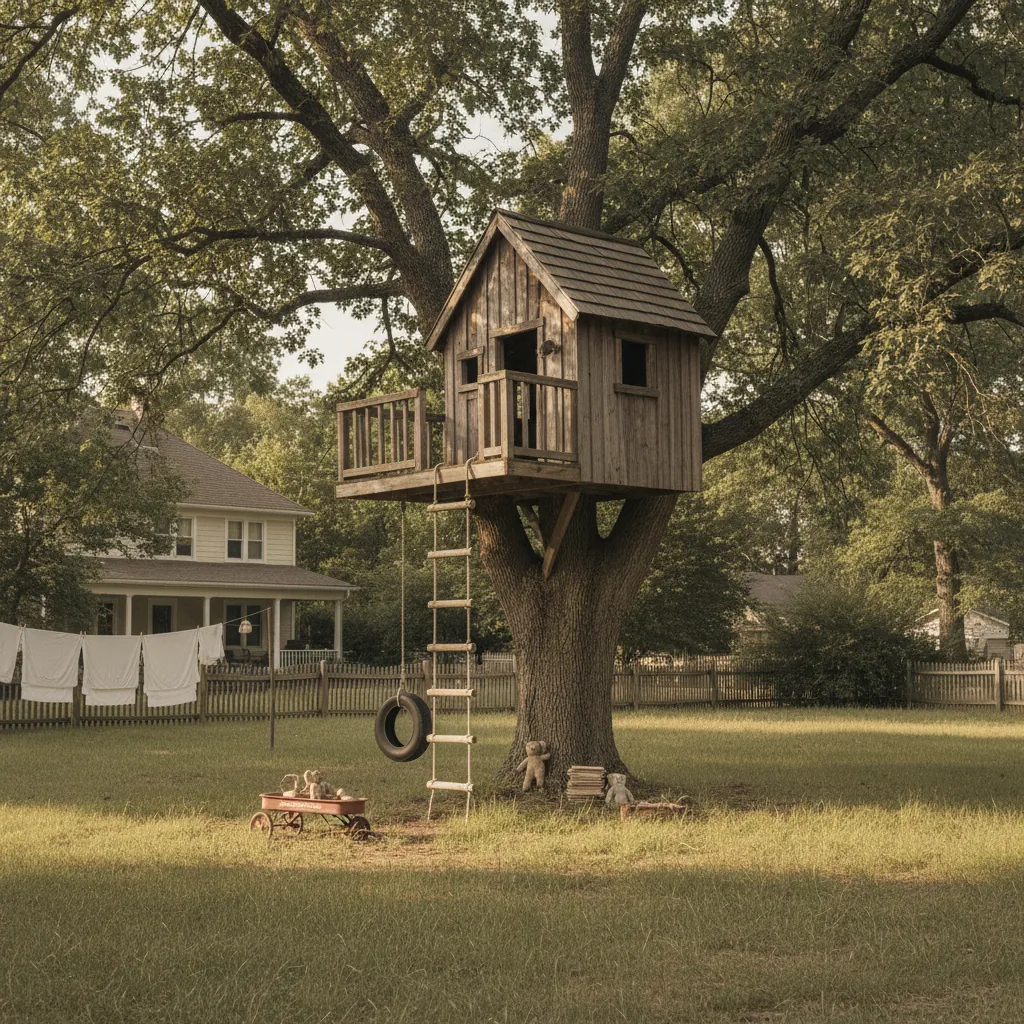 Illustration created for WistMem; not an archival photograph.
How do we tell the family's version?
A household tree house could change every season. Someone added a shelf for collected stones, replaced a board after a storm, or painted a sign announcing that visitors needed permission. In a surviving photograph, the ladder and roof may be more memorable than the faces. Ask who carried materials up and who was allowed inside. The National Park Service's study of postwar outdoor play includes tree climbing among many forms of play; a built refuge turned that climb into a place to return to.
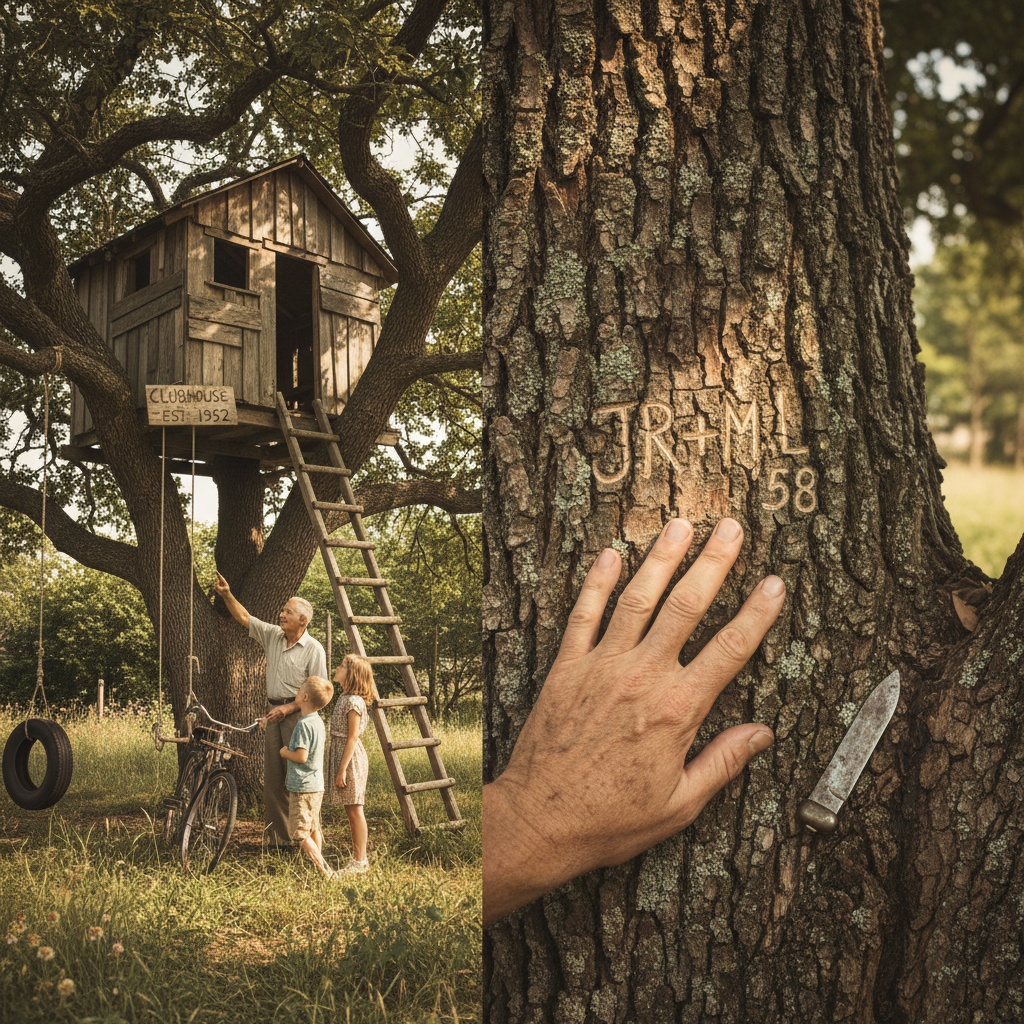 Illustration created for WistMem; not an archival photograph.
The structure and its limits
Rain changed the smell of the timber and the feel of the ladder. Growing branches shifted the view; a friend visiting for the first time had to learn the house rules. By the time a family took the platform down, the children might already have outgrown it. A photograph of the empty tree or a scrap of painted sign can still bring back the negotiations that made it theirs. A tree house was never just the timber: it was the rule about who could climb in.
For another improvised outdoor place, visit The Neighbourhood Sandlot Baseball Diamond.
What does it bring back for you?
Ask someone who remembers, or begin with your own version. A few words can be enough.
Where did you like to spend an afternoon when you were young?
Then ask: What could keep you there longer than you planned?
Find more conversation starters Choose what feels comfortable. Ask before recording or sharing someone’s words.Relive the Memory
Find a little of the story.
Something here bring back a memory? Take a look at what you can find today.
Searching for: vintage retro backyard tree house
Vintage & collectible finds
Look for older objects and collectibles connected to this memory.
Search eBay (opens in a new tab)Related finds on Amazon
Explore items related to the same topic, from familiar styles to things made today.
Search Amazon (opens in a new tab)These links open search results. Items, prices, and availability vary.
Affiliate links. We may earn a commission at no extra cost to you.
As an Amazon Associate I earn from qualifying purchases. As an eBay Partner, WistMem may earn from qualifying purchases.
Does this bring back memories?
Share this story with someone who would remember.